


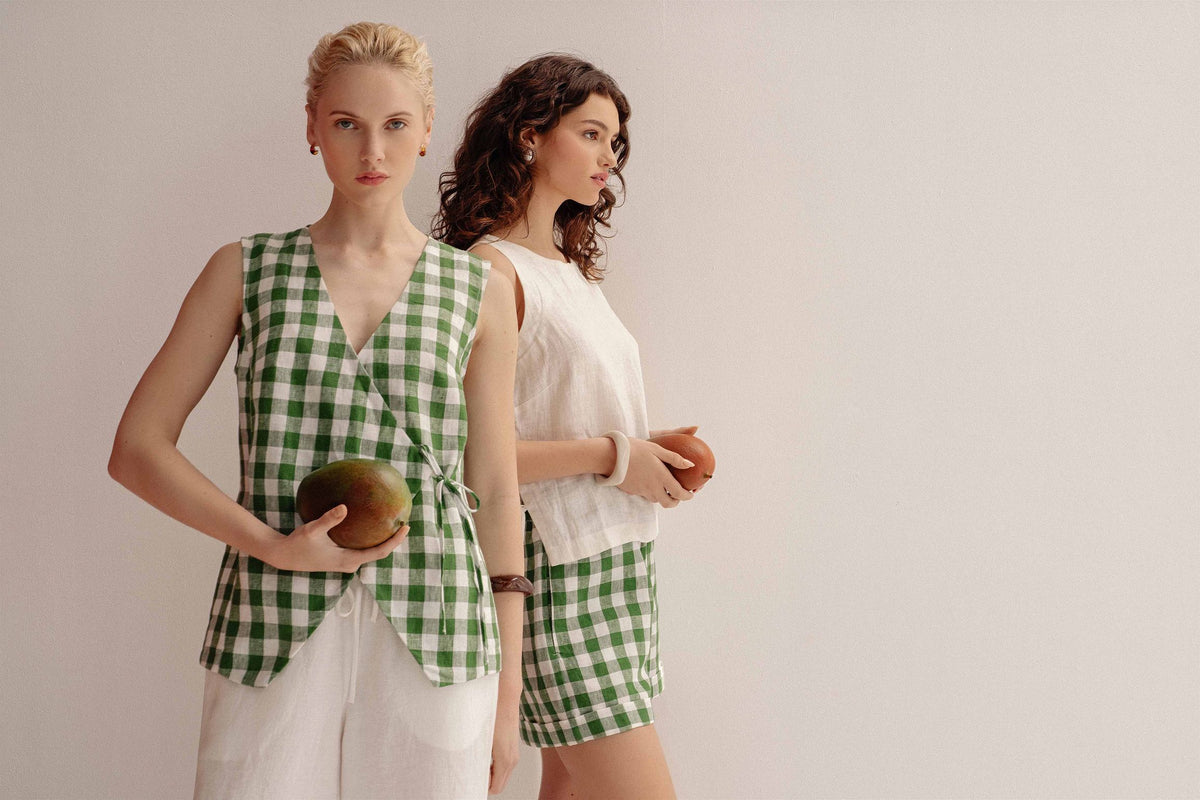

Not all linen is the same.
Linen is derived from flax, one of the oldest cultivated plants in the world and one of the most demanding to grow well. Flax requires cool air, long daylight hours, and soil conditioned over generations of careful cultivation. Grown too quickly or in the wrong climate, the fibres come out short, uneven, and fragile. Given the right conditions and enough time, flax produces something far more remarkable.


It starts with the land
Lithuania sits on the Baltic Sea, where summers are short and daylight lingers late into the evening. The soil here is cool and clay-rich, giving flax the slow, unhurried conditions it needs to develop well.
Fibres grown in this climate mature slowly, resulting in flax that is longer, stronger, and more consistent than fibre from warmer regions, where the plant rushes to seed. This difference is not visible at first. It reveals itself over time, in how the fabric wears and holds up.

A tradition older than fashion
Flax has been grown in Lithuania for thousands of years, woven into folklore, ritual, and the way people here understood the world around them. Ancient Lithuanians honoured the craft with its own gods: Vaižgantas, who watched over the growing of flax, and Gabjaujis, who protected the work of turning it into cloth.
Growing flax demands roughly five times more effort than grain, with every stage requiring patience and many hands. That devotion shaped a body of knowledge passed down through generations, and it remains alive in the way linen is grown and made today.


Those little bumps in the fabric
Small raised slubs and thicker threads run naturally through the weave of linen, a direct result of how flax fibre is spun. Unlike cotton, which is processed into a uniform thread, flax retains its natural irregularity through spinning and weaving.
A perfectly smooth linen surface usually signals heavy processing or a synthetic blend added to mask that texture. The slubs you see are what 100% linen looks like in its true form.
With every wash, the fabric softens further. The slubs remain, so does the quality they come from.


Why your shade might vary slightly
Linen is dyed from a natural fibre, not a synthetic one, and that difference shows up in colour. Flax is a plant, so its raw fibre changes slightly from one harvest to the next, shaped by the sun, rainfall, and temperature of that particular growing season. Retting, the process of leaving cut flax out in the field until moisture loosens the fibre from the stalk, adds another layer of that season's influence before the fibre ever reaches a dye vat.
Because the undyed fibre is never perfectly uniform, it doesn't always take colour identically from one batch to the next. Two lots of the same dye recipe, applied to two seasons of flax, can settle into slightly different shades. This is a natural feature of plant-dyed fabric, not a flaw in the piece you've received.
A small variation between two pieces in the same colourway, or between what you see on screen and what arrives, reflects the fibre's origin: grown outdoors, season after season, never quite the same twice.


